
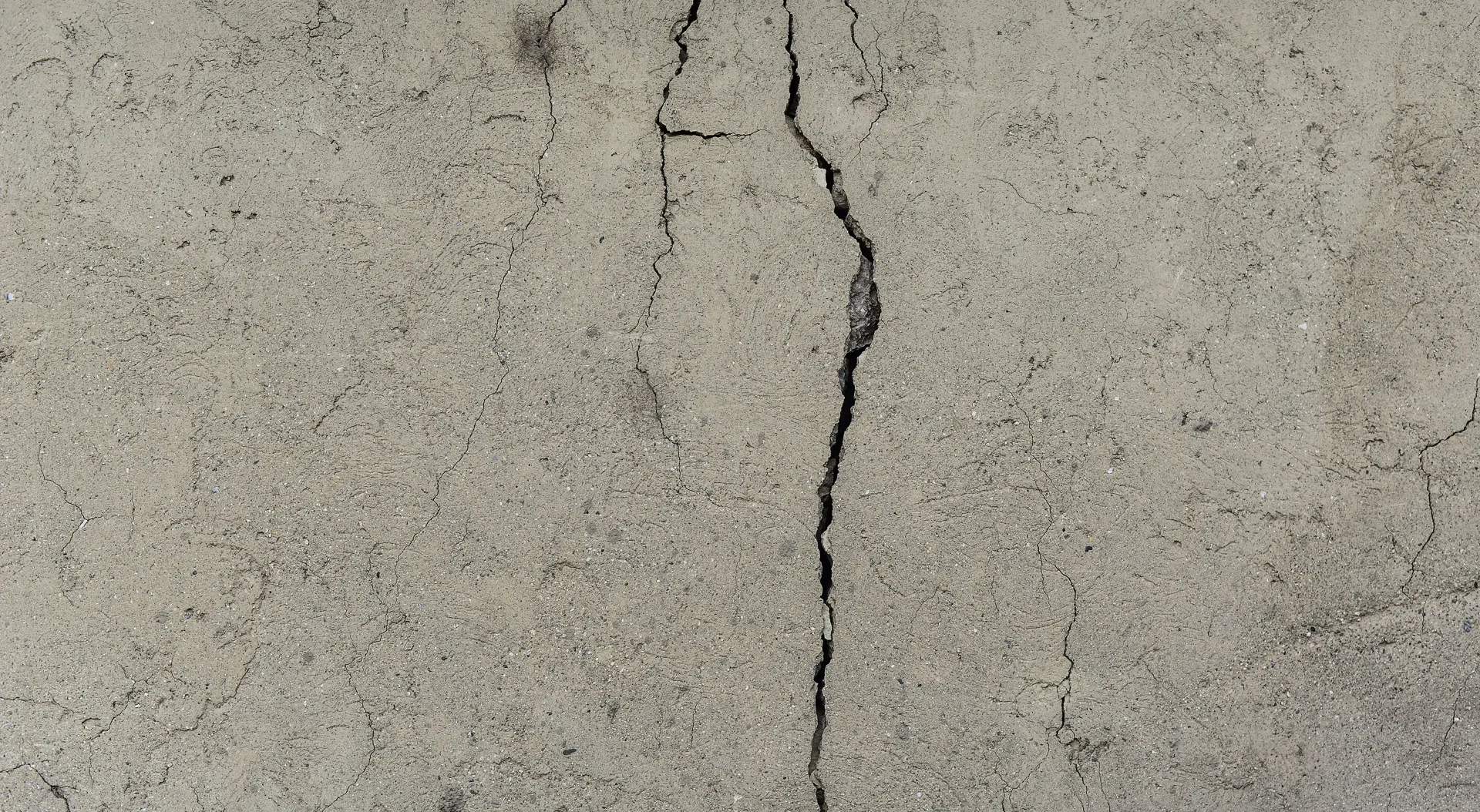
A Homeowner’s Guide to Foundation Cracks
November 3, 2025Should You Worry About Foundation Cracks?
Seeing cracks in the walls of your house can cause instant panic. The foundation is the bedrock of your home, and any sign of damage can trigger fear of major foundational damage. This is why foundation cracks are one of homeowners’ biggest concerns.
But here’s the takeaway, not every crack is an emergency. The key is knowing when a crack is minor vs major, when it signals a serious structural problem.
Hairline cracks or vertical cracks are minor and mostly just a result of concrete curing. In contrast, wide cracks or diagonal cracks show serious issues like shifting and bowing walls that demand attention. Minor cracks become major cracks when left untreated and show the importance of professional inspection and timely repair.
Types of Foundations: Find Out The Kind Your Home Has
Common Foundation Types
- Poured Concrete
This type is a single, joint-free solid wall and is most common in the Midwest. It’s water resistant, and cracks here are often straight, usually the result of the concrete curing process. - Concrete Block or Brick Foundations
These walls are built from individual units held together by mortar. When these foundations move, the resulting cracks usually follow the mortar joints in a distinct “stair-step” pattern. - Slab-on-Grade Foundations
This is a thick, massive concrete slab poured directly on the ground with no basement or crawl space, making it common in south and coastal regions. When cracks appear, they show up on the floor itself or near the base of interior walls. - Crawl Spaces and Basement
Both involve full or partial walls that are directly exposed to external soil and fluid pressure, which can cause the walls to bend or shift sideways.Beyond the foundation walls, the external environment is also important. You must consider how local soil and climate impact foundation design, especially in areas like St. Louis the local clay soil expands and shrinks. This directly relates to the role of the footing in supporting and stabilizing the structure, as it distributes your home’s weight.
Foundation Cracks: Types and What They Mean
- Vertical Cracks
Vertical cracks run straight up-and-down or slightly diagonal. It’s commonly caused by natural curing and minor tension in new concrete as it dries.
These cracks are typically cosmetic or a source of minor water seepage, and the most common solution is urethane or epoxy injection to seal and waterproof the area. - Diagonal Cracks
Diagonal cracks are angled (30-75° from vertical), often wider at one end. The common cause for this is differential settlement, meaning uneven soil support.
Signs to look for include cracks near corners or varying widths across the length of the crack. Solving includes crack injection, plus an investigation into the settling cause, whether it’s drainage issues or soil movement. - Horizontal Cracks
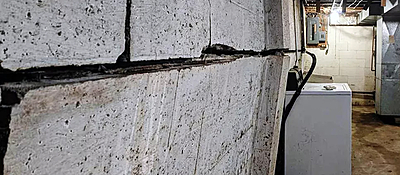
Horizontal cracks run sideways along the wall. It’s usually caused by bowed walls, due to saturated soil, hydrostatic pressure, or poor drainage pushing against the foundation.
This is always a serious structural concern and can lead to wall failure. The required solution is structural reinforcement, which includes interior strapping, wall anchors, or braces. This type of damage must always be evaluated by a structural engineer. - Step Cracks
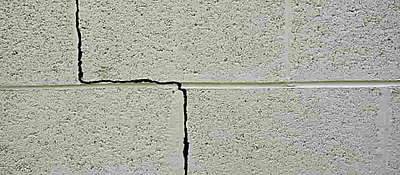
Step cracks are fractures that follow a stair-step pattern along brick or block mortar joints. It’s caused by uneven settling or soil movement beneath the foundation.
The cracks are minor if limited to the mortar, but become more serious if bricks or blocks are displaced. It can be solved by motor repointing for minor cases and professional evaluation for displaces or deep cracks.
When To Call a Professional?
Fixing The Problem: Foundation Crack Repair Options
Once a professional has accurately diagnosed your crack, they will recommend a targeted solution. The Repair method depends on the type of crack and its cause.
Here’s a quick overview of common repair methods:-
- Urethane or epoxy injection
This method is used for sealing and waterproofing minor, non-structural cracks. - Structural reinforcement or wall bracing
This is necessary for serious issues like bowing walls, and will be fixed using anchors or steel beams to stabilize the structure. - Soil stabilization or drainage correction
This approach works to manage the root external cause, helping prevent future issues by controlling the water and pressure around the foundation.
When you invest in Foundation crack repair in St. Louis, you should look for the benefits of professional polyurethane-based repairs for long-term stability. It is important because, unlike rigid epoxies, polyurethane remains flexible.
Keep Cracks Away: How to Prevent Future Foundation Cracks
Taking simple, consistent steps to manage water around your home is your strongest defense against future foundation issues.
| Action | Why it Works |
|---|---|
| Proper grading and drainage around the home. | Makes sure the ground slopes away from the house so water doesn’t pool next to the foundation, reducing soil saturation and pressure. |
| Extending downspouts away from the foundation | Directs large volumes of rainwater at least 5–10 feet away from the base of the home, preventing hydrostatic pressure buildup. |
| Monitoring for new or widening cracks | Regular checks in your basement/crawl space and marking suspicious cracks lets you track growth or movement — early detection is crucial. |
| Scheduling routine inspection | A professional assessment can catch small issues you might miss and allow you to address soil or drainage problems before they become structural. |
Conclusion: Don’t Ignore the Signs
Many homeowners fear that a foundation crack means immediate and disastrous failure. The reality is that foundation cracks are common, but not always serious. Many are surface level, yet they should never be ignored.
The most important lesson here is early detection and expert evaluation. Don’t guess when it comes to your home’s stability. Whether you need a simple polyurethane injection for waterproofing or a full structural assessment.
Try being proactive and not reactive. The next smart step for proven Foundation crack repair in St.Louis is to schedule a professional assessment for peace of mind and protect your most valuable investment.