
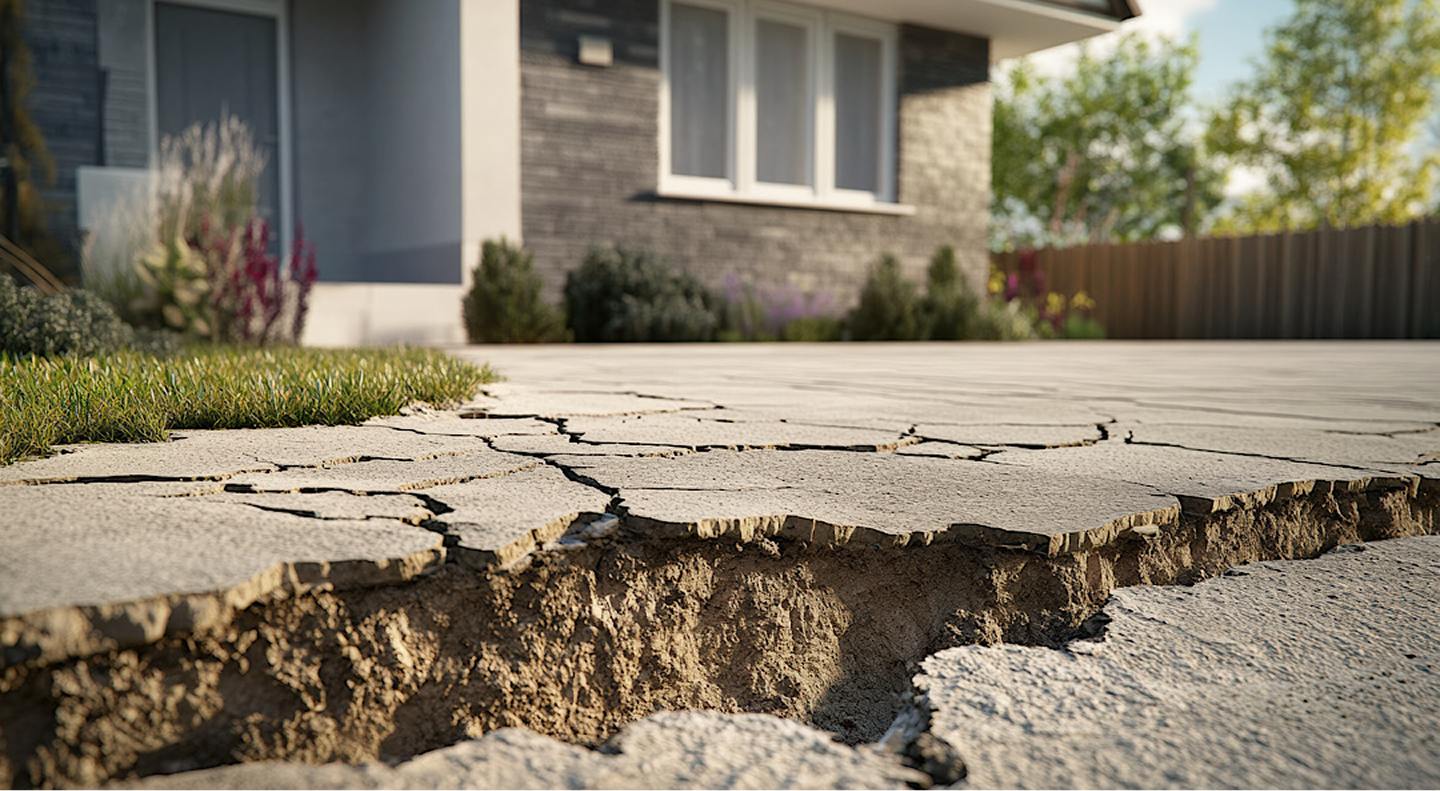
Why Your Concrete Sinks: The Hidden Soil Problems Under Missouri Homes
February 17, 2026If your driveway looks like it’s slowly melting into the ground, what you’re seeing is a slow underground shift that’s not usually noticed until it becomes a problem. If you live in Missouri, you must be aware of the seasonal changes from heavy spring rains to hot & dry summers, and the freeze-thaw cycles create constant movement in the soil under homes, making concrete settlement a common problem across the state.
And many homeowners immediately blame the concrete itself, assuming it’s cracked because it was poorly poured. But the reason why concrete sinks in Missouri is usually related to the soil underneath it.
Studies on expansive and moisture-reactive soils show that nearly 50% of areas in Missouri are clay-heavy soils that experience settling, which is why driveways, patios, and walkways sink or dip on the surface over time. This blog focuses on why concrete settles and what homeowners should do before the damage worsens.
How Polyjacking Fixes Sinking Concrete?
Polyjacking injects an expanding polyurethane foam beneath the slab to restore lost soil support. The foam fills empty spaces, strengthens weak ground, and gently lifts the concrete back to a level position. Because it cures quickly and adds minimal weight, polyjacking provides a fast, long-lasting repair without major disruption.
How Does Concrete Settle Beneath Your Home
While constructing a house or driveways, the concrete that is poured is stable for a long time even after the project is finished. That said, fully cured concrete stays stable and doesn’t shrink on its own, but concrete depends entirely on the soil beneath it for support, and when that soil shifts, compresses, or washes away, the slab above begins to move with it.
Unstable soil is the main reason behind concrete settling. Moisture changes can cause soil to expand during wet periods and contract during dry conditions. As the slabs move, homeowners notice more of the signs of driveways and walkways sloping, patios developing low spots, and garage or entry doors that start to stick to the ground as the surrounding concrete shifts.
5 Warning Signs Your Concrete Slab May Be Sinking
Even small dips in your concrete can cause daily disturbances that are ignored. The early clues are subtle and in everyday problems that homeowners dismiss as “normal wear.” Knowing how to tell if a concrete slab is sinking is paying attention to how your property changes with daily use, weather, and time, especially in areas exposed to moisture and shifting soil.
- Driveways or walkways that feel uneven or sloped
- Cracks forming along slab edges or across interior slabs
- Doors or door frames that rub or stop closing
- Water pooling near your foundation or basement walls.
- Raised edges that create trip hazards
How Clay Soil Affects Concrete Slabs: Missouri's #1 Foundation Risk
Expansive Clay Soils
Much of Missouri sits on expansive clay soil. These soils hold water during wet seasons and expand, then shrink as moisture levels drop. This repetitive cycle causes soil movement that gradually weakens the base beneath concrete slabs.
During seasonal shifts in spring and fall rains, concrete slabs lift and then settle unevenly. As time passes, slabs may no longer sit evenly on the soil, which is a typical sign of how clay soil affects cracks, following a pattern or moving unstable concrete slabs.
Poor Soil Compaction During Construction
Even properly poured concrete depends on well-prepared soil beneath it. If the soil wasn’t compacted thoroughly during construction, it may compress further under the weight of the slab and daily use. This is a common reason for soil-related concrete sinking in both new and older houses in Missouri.
These settlements stay hidden for years and may be difficult to detect during early inspections. The signs are visible only when the soil is compressed noticeably, with uneven driveways and patios.
Erosion and Washouts
Water washouts are another major factor behind why concrete sinks in Missouri. Heavy rainfall, improper drainage, leaking plumbing lines, or downspouts discharging too close to slabs can wash away soil beneath concrete surfaces.
As the soil erodes, it creates empty spaces and reduces structural support. Washed-out soil creates sloped surfaces, separated edges, or visible low spots where the soil has eroded.
Organic Material in Soil
Sometimes, soil is mixed with organic matter such as tree roots, leaves, or leftover construction debris. Over time, this material decomposes, leaving empty spaces in the ground.
These empty spaces cause localized sinking, where soil sinks only at certain places, not across the whole slab. This creates uneven surfaces that gradually break down as the soil continues to break down.
Underground Water Movement
Shifting groundwater levels can also weaken soil support beneath concrete slabs. During periods of heavy saturation, soil loses strength and reduces its capacity to bear loads. As water levels fluctuate, the ground beneath concrete continues to change.
This type of underground movement can be seen under basements, patios, and driveways and creates long-term settlements.
How STL Polyjack Fixes Soil-Related Concrete Problems
When concrete starts to sink, patching the surface won’t solve what’s happening below. The best fixes for a sunken driveway work by restoring the soil support underneath the slab. Targeting the unstable soil disrupting your property.
Polyurethane Foam Lifting
Polyjacking works by injecting a high-density polyurethane foam beneath the slab through small, marked holes. The lightweight foam flows into empty spaces, expands, and gently lifts the concrete slab evenly.
To understand how polyjacking fixes sinking concrete? Think of it as rebuilding the support beneath the slab rather than replacing the concrete itself. The polyurethane foam is injected, where it spreads into weak or empty spaces and expands to reinforce the support under the slab. Because the foam cures quickly, most surfaces can be used the same day with minimal disruption to your property.
Soil Stabilization Techniques
Lifting the slab is only part of the solution. As the foam expands, it compresses and reinforces weak or eroded soil beneath the concrete, creating a more stable base. This added support reduces future movement caused by moisture changes or washouts, helping prevent the same slab from settling again months or years later.
Crack Repair & Joint Sealing
Once the slab is properly supported, existing cracks and joints become vulnerable entry points for water. Sealing these areas prevents moisture from reaching the soil below, where it could undermine the repair. Proper joint sealing helps preserve the newly stabilized slab and reduces the risk of recurring soil-related movement.
Waterproofing (If Needed)
In locations where water exposure is ongoing, additional waterproofing may be recommended. Protecting the slab and surrounding soil from repeated moisture intrusion helps prevent erosion beneath the concrete. This approach can be applied to both interior and exterior slabs, depending on drainage conditions and soil behavior around the home.
Preventing Future Concrete Settlement in Missouri Homes
Concrete settlement can often be reduced by controlling how moisture interacts with the soil around your home throughout the year. In Missouri, frequent shifts between heavy rain, dry spells, and freeze-thaw cycles gradually weaken soil support beneath the concrete surface.
Maintain proper drainage around your foundation
Make sure water flows away from concrete surfaces instead of collecting near slabs, where it can weaken soil support over time.
Inspect downspouts and gutters regularly
Loose or clogged downspouts stagnate water in one area, increasing the risk of washouts beneath driveways and walkways.
Address early cracks or low spots quickly
Small surface changes are often the first sign of soil movement and are easier to correct before settlement increases.
Schedule professional inspections if changes continue
If your concrete continues to shift despite basic maintenance, have a specialist like STL Polyjack assess the slab and identify underlying soil issues before they lead to larger repairs.
For a closer look at how modern repair methods prevent ongoing movement, read more about how polyfoam keeps concrete from sinking beneath Missouri homes.
Don’t Wait Until The Soil Under Your Concrete Creates Costly Repairs
Get a free inspection from STL Polyjack today!