The Role of Soil Erosion in Concrete Settlement
September 30, 2025Have you ever walked across a driveway or sidewalk and noticed it feels uneven or cracked? That’s concrete settlement at work, the gradual sinking or shifting of slabs that leaves surfaces sloped, cracked, or even unsafe. While several factors contribute to settlement, one of the biggest culprits is soil erosion.
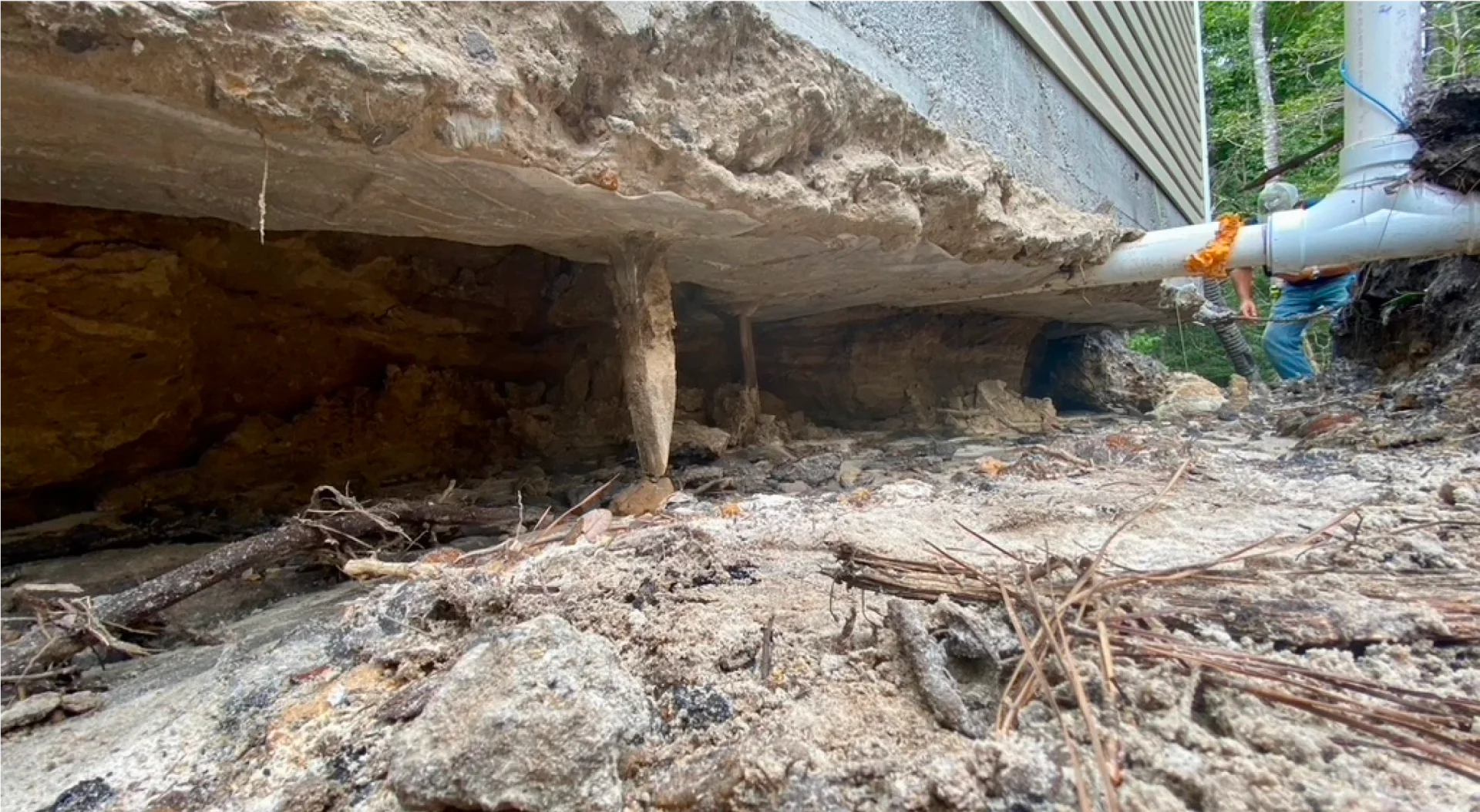
Soil erosion may not always be visible, but it quietly weakens the ground beneath your concrete. Over time, this hidden process leaves slabs without support, causing them to sink and tilt.
In this blog, we’ll explore what soil erosion is, how it leads to settlement, the signs you should watch for, and the best ways to prevent or repair the problem.
1. What is Soil Erosion?
At its core, soil erosion is the gradual wearing away or displacement of soil, usually caused by water, wind, or even poor landscaping practices. While it’s a natural process, it can wreak havoc in residential areas where homes, driveways, and patios depend on stable ground.
Common causes include:
- Heavy rainfall washes soil away.
- Poor drainage that allows water to flow where it shouldn’t.
- Downspouts that release water directly near concrete.
- Landscaping choices that don’t hold soil in place.
Concrete surfaces are especially vulnerable because they need compact, stable soil underneath to stay level. Once erosion starts removing that support, the trouble starts to follow.
2. How Soil Erosion Leads to Concrete Settlement
Picture a driveway slab resting on firm ground. Now imagine that over a period of time, water slowly washes away some of that soil. As voids form beneath the slab, the concrete no longer has full support. Eventually, gravity takes over and the slab begins to sink, crack, or tilt.
You’ve probably seen it before:
- A driveway that slopes toward the street instead of lying flat.
- Sidewalk sections where one edge sticks up higher than the next.
- A patio pulling away from the house foundation.
3. Signs of Soil Erosion Under Your Concrete
Soil erosion isn’t always easy to spot until the damage is obvious. But there are early warning signs:
- Gaps forming: Spaces between slabs and the soil beneath them often indicate washout.
- Water pooling: After rain, if water sits instead of draining away, erosion may already be reshaping the ground.
- Visible washout: In some cases, you’ll actually see soil being carried away after a storm.
Catching these signs early can save you from bigger, more expensive repairs down the road.
4. Long-Term Impacts if Left Unchecked
Ignoring soil erosion makes it worse. As more soil washes out, slabs sink further, cracks spread, and uneven surfaces multiply. What starts as a cosmetic issue can quickly snowball into structural concerns.
Poor drainage caused by erosion can also push water toward your home’s foundation. That’s a risk no homeowner wants to take, as foundation repairs are often among the costliest home fixes. The longer you wait, the higher the repair bill will be when you finally address the problem.
5. Preventing Soil Erosion Around Concrete
The good part is that many soil erosion problems can be reduced or even avoided with proper care. Here are a few preventative steps:
- Ensure proper grading: The ground around your home should slope away from the foundation and concrete surfaces.
- Extend downspouts: Direct water flows several feet away rather than letting it dump next to driveways or patios.
- Install drainage solutions: French drains, gravel beds, or catch basins can help manage runoff.
- Smart landscaping: Plants with deep root systems help hold soil in place, reducing washout during storms.
In some cases, pairing erosion control with maintenance services such as concrete caulking can help protect joints and prevent water from sneaking under slabs in the first place.
6. Repairing Concrete Damaged by Soil Erosion
If erosion has already taken its toll, don’t assume replacement is your only option. Modern techniques like polyurethane foam lifting can restore sunken slabs. Here’s how it works:
- Small holes are drilled into the slab.
- A specialized foam is injected underneath.
- The foam expands, filling voids left by erosion and lifting the slab back into place.
This method is quick (often completed in hours), cost-effective (much cheaper than replacement), and eco-friendly (reusing your existing slab instead of discarding it). Best of all, it stabilizes the soil and prevents further erosion problems.
To better understand how this repair process works, check out our blog on Concrete Leveling in St. Louis for a closer look at why lifting is often a smarter choice than replacing.