The Science Behind Concrete Settling
October 23, 2024Common areas where concrete settling occurs include:
- Driveways: Heavy vehicles and fluctuating soil conditions often cause driveway slabs to sink.
- Sidewalks: Sidewalk slabs may become uneven due to soil erosion or changes in moisture levels.
- Patios: Outdoor patios, particularly those not properly supported by a strong foundation, can shift over time.
- Foundations: The most critical area, where settlement can lead to major structural issues if not addressed.
What Really Happens? The Science Behind Concrete Settling:
- Soil Composition: Soils with a high clay content tend to expand when wet and shrink when dry. This constant movement beneath the concrete creates gaps, causing the slab to settle or crack. Sandy soils, on the other hand, are more prone to erosion, which can also lead to settling.
- Moisture and Erosion: Water is one of the primary factors in soil erosion. Whether it’s from heavy rains, plumbing leaks, or poor drainage, excessive moisture can wash away the soil that supports the concrete. This leaves a void beneath the slab, causing it to sink over time.
- Soil Compaction: Poorly compacted soil during the construction phase is a leading cause of settling. If the ground beneath the concrete is not properly compacted, it becomes more susceptible to shifting as the weight of the concrete presses down over the years.
- Freeze/Thaw Cycles: In regions with cold winters, the freeze/thaw cycle can wreak havoc on concrete slabs. When water trapped in the soil freezes, it expands, pushing the concrete upward. When it thaws, the concrete can settle unevenly, leading to cracks or sinking.
- Heavy Traffic and Weight: Areas subjected to heavy traffic or weight—such as driveways, parking lots, or warehouse floors—are more prone to settling due to the added stress on the concrete.
Signs Your Concrete is Settling
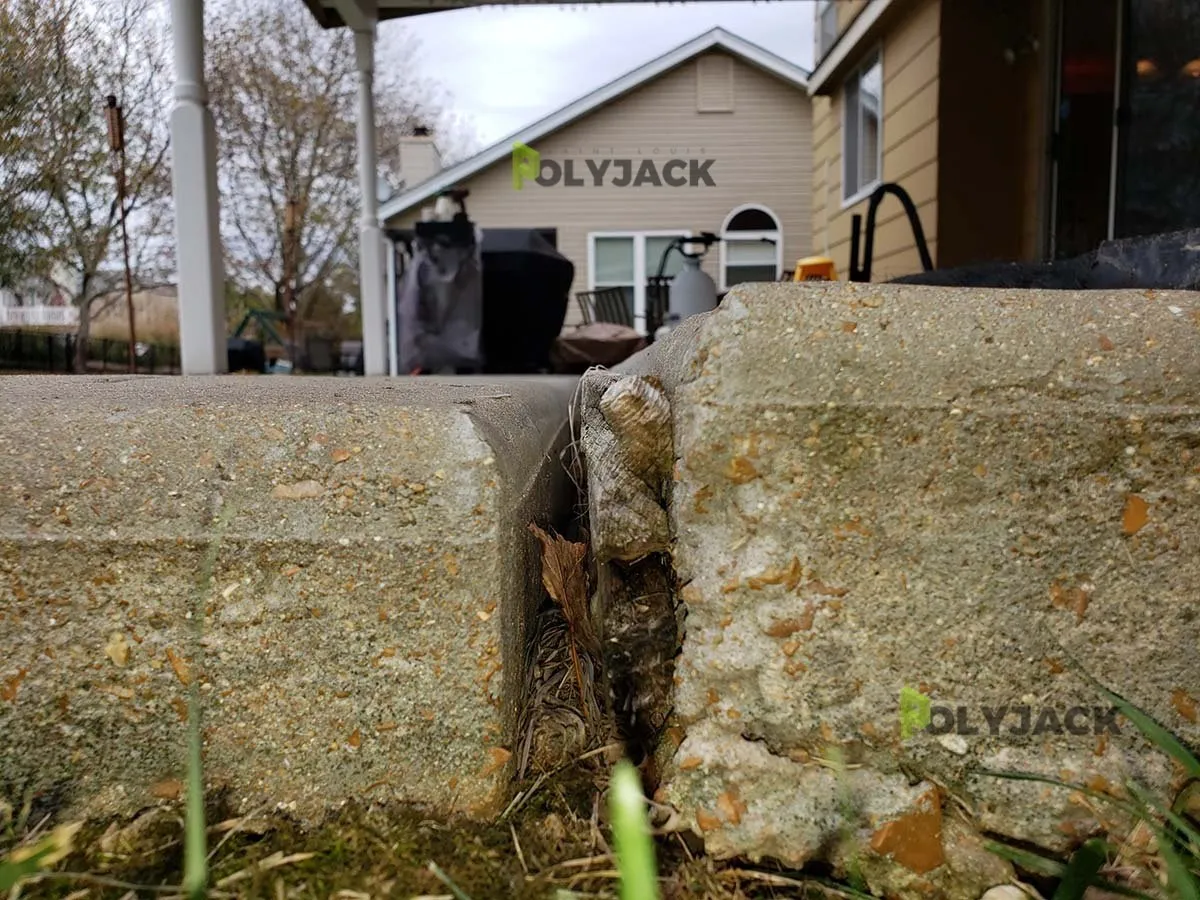
Cracks: Hairline or larger cracks may begin to form on the surface of the slab or along the joints where concrete sections meet. Over time, these cracks can widen, allowing moisture to seep in, which further exacerbates the damage.
Uneven Surfaces: Noticeable slopes, dips, or shifts in the concrete, particularly where sections connect, are telltale signs of settling. A once-flat driveway, patio, or walkway may start to develop a slight tilt, indicating that the soil beneath has shifted or compressed.
Pooling Water: After rainfall, you may observe water collecting in certain areas, especially in low spots. This is a sign that the slab has sunken in those areas, preventing proper drainage and potentially leading to further damage from erosion or freeze-thaw cycles.
Trip Hazards: Uneven slabs or raised edges where concrete has settled at different levels create dangerous tripping hazards. These are most commonly found on sidewalks, patios, and driveways, posing a significant risk to pedestrians.
Neglecting these warning signs can result in more severe issues over time. Left unaddressed, the settlement can worsen, leading to foundation cracks or even undermining the structural integrity of your home or business. Additionally, you may be held liable for injuries caused by tripping hazards on your property, adding a legal dimension to the financial burden. Taking action early can save you from much larger repairs and potential liabilities.
The Long-Term Consequences Of Ignoring Settling
Foundation Cracks: When concrete settles unevenly, it puts stress on the foundation, causing cracks to develop. These cracks not only compromise the stability of the structure but can also allow water to infiltrate your basement or crawl space. Persistent moisture can lead to mold growth, wood rot, and further structural degradation, turning a small issue into a major problem.
Water Leaks: As concrete shifts, it alters the natural drainage patterns around your home. This can result in water pooling near the foundation, causing leaks in basements, lower levels, or crawl spaces. Over time, repeated water exposure can weaken your foundation and cause costly water damage, including ruined insulation, flooring, and drywall.
Safety Hazards: Uneven surfaces created by settling concrete pose serious safety risks, especially in high-traffic areas like sidewalks, driveways, and patios. Whether it’s family members, visitors, or customers, the risk of trips and falls increases significantly. For businesses, this can lead to personal injury claims or lawsuits, impacting both reputation and finances.
Expensive Repairs: The longer settlement issues are neglected, the more expensive the repairs become. Simple fixes like concrete lifting or slab jacking can mitigate early-stage settlement at a lower cost. However, if left unaddressed, the damage can escalate, requiring full slab replacements or even major foundation repairs, both of which are much more costly and time-consuming.
Addressing these issues early on allows homeowners and businesses to avoid not only the escalating costs of repairs but also the risk of legal liabilities associated with injury claims. Proactive maintenance is the key to preserving both the value and safety of your property.
How We Fix Concrete Settling At STL Polyjack
At STL Polyjack, our team boasts over 25 years of extensive experience in providing top-notch Concrete Repair Services in St. Louis. We possess in-depth knowledge of the local geography, enabling us to offer precise and effective solutions for addressing any concrete settling issues in your residential property. Our skilled experts primarily use the advanced technique of polyjacking to rectify a wide range of concrete problems. This method involves injecting a specialized foam, resulting in a significantly reduced repair time, allowing the treated area to be swiftly utilized within hours. This approach ensures not only a swift resolution but also an efficient and long-lasting solution to your concrete concerns.
Polyurethane Foam Injection: The process begins with small, precise holes drilled into the sunken concrete. A specialized polyurethane foam mixture is then injected beneath the slab. As the foam expands, it fills the voids caused by soil erosion or shifting, gradually lifting the concrete back to its original position. This ensures a level and stable surface without the need for major construction work.
With its quick, non-invasive application and reliable results, it’s an excellent way to enhance the appearance and structural integrity of your concrete surfaces while avoiding the hassle and cost of complete replacement.
Conclusion:
Settling of concrete is a common problem that can lead to costly repairs and safety risks if left unattended. However, if you are in St. Louis, there’s no need to worry because our team is prepared to assist you with any issues you may face. Our skilled professionals will assess your concrete surfaces and provide a tailored solution to restore them to their original condition.
Don’t wait for the damage to worsen—contact us today for a free inspection and quote!